Pet care costs
Lendgo Loans: How Do You Pay for Dog Surgery?
Dog surgery often needs a deposit before the procedure and full payment at pickup. A clear estimate and a payment plan made in advance take much of the stress away.
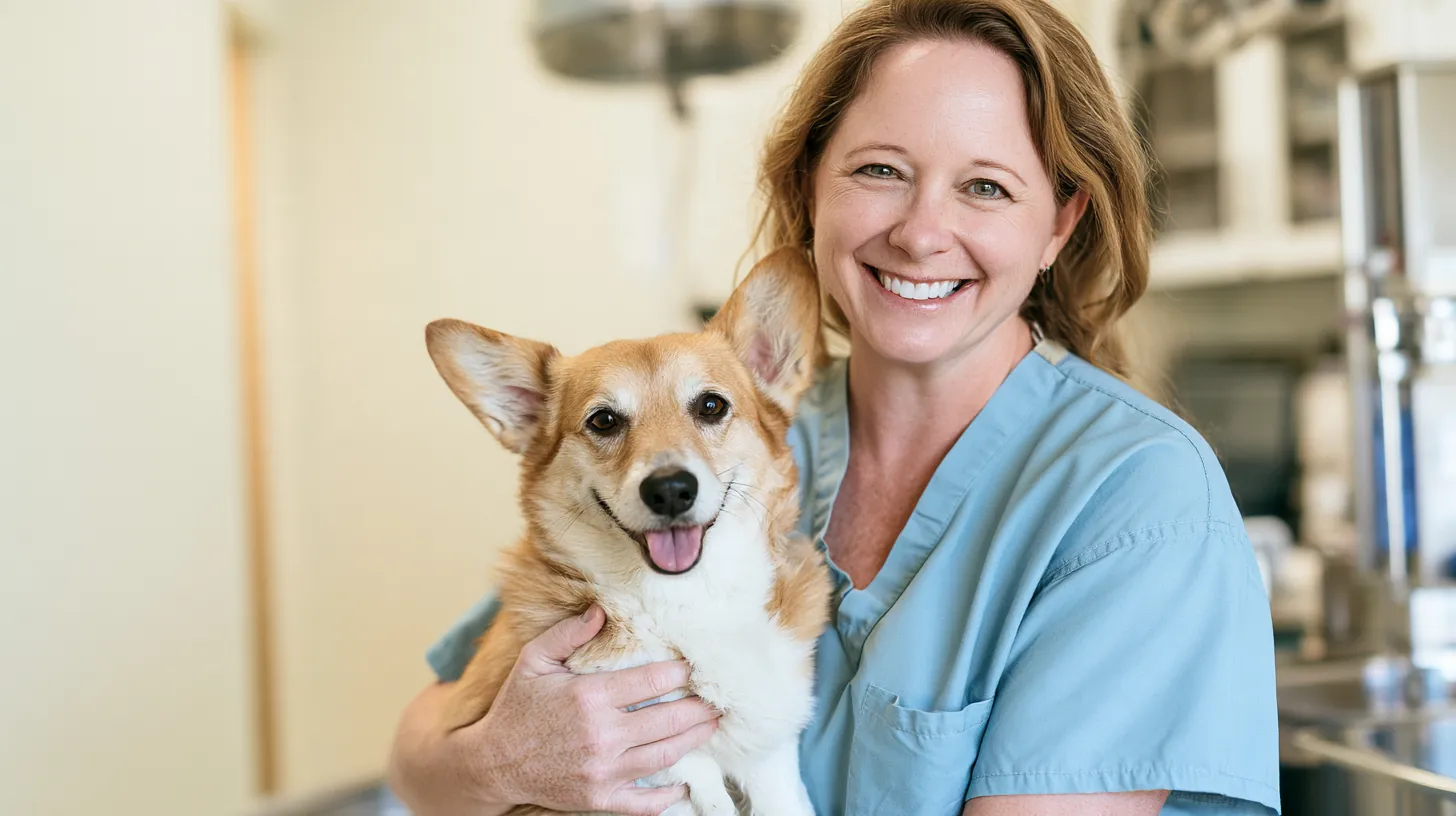
When your vet says your dog needs surgery, the first feeling is usually worry for your dog. The second, often a few minutes later, is worry about the bill. Many people searching lendgo loans arrive with an estimate in hand and a short window to decide how to pay. Whether the procedure is a torn knee ligament, a swallowed object or a mass that needs removing, the payment process tends to follow the same pattern: a written estimate, a deposit before surgery, the balance at discharge, and, if you have insurance, a reimbursement weeks later. Below we explain each step, compare the main ways to pay, and show how to borrow the right amount if you need a personal loan. We are not veterinarians, and nothing here is medical advice. Your vet is the right person to explain your dog's options.
Start with a written surgical estimate
A written, itemized estimate with a low and high range is the foundation of any payment plan, because it shows what the surgery, anesthesia, hospital stay and take-home medications are likely to cost before you commit.
Most clinics provide a surgical estimate before scheduling or, in an emergency, before starting the procedure. A typical estimate includes several line items:
| Line item | What it covers |
|---|---|
| Pre-surgical exam | The vet's assessment before the procedure |
| Pre-anesthetic blood work | Tests your vet may recommend before anesthesia |
| Anesthesia and monitoring | Drugs, monitoring equipment and the technician's time |
| Surgery fee | The procedure itself, often priced by complexity and time |
| Imaging | X-rays or ultrasound, if needed before or after surgery |
| Hospitalization | Overnight stay, fluids and nursing care |
| Medications | Pain relief, antibiotics or other take-home prescriptions |
| Follow-up visits | Rechecks and suture removal |
Commonly reported totals vary widely. Simpler soft-tissue surgeries are often described in the range of roughly $800 to $2,500, while orthopedic or emergency abdominal procedures commonly run $2,500 to $6,000 or more. These are broad estimates; your clinic's quote is what matters. Ask whether follow-up visits and medications are included, because those can add a few hundred dollars after discharge.
If the estimate is more than you can manage
Tell the team honestly what you can afford. Vets hear this every day, and it opens a practical conversation rather than closing one. You might ask whether any line items can be done later at your regular clinic, whether a staged approach is possible, or whether a nearby general practice or teaching hospital handles the same procedure at a different price. Some areas also have nonprofit or charitable funds that help with specific pet medical costs, and local shelters sometimes know which ones are active. Your vet is the person to explain what is medically reasonable for your dog; your job is to share your budget so the plan fits both. Owners who start comparing lendgo loans only after that conversation usually end up borrowing less, because they know exactly which costs are unavoidable and which can wait a few weeks.
Understand deposits and when payment is due
Many clinics ask for a deposit of roughly 50% of the low estimate, or sometimes the full low estimate, before surgery, with the remaining balance due when your dog goes home.
Deposit policies differ from clinic to clinic, so ask these questions early:
- How much is the deposit, and when is it due? For planned surgery, it may be due at scheduling or the morning of the procedure.
- When is the balance due? Most clinics expect payment in full at discharge.
- What happens if costs exceed the estimate? Ask the team to call you before going above the high end.
- Which payment methods are accepted? Cards, financing cards and sometimes checks; few clinics accept loans directly, so you'll typically pay with funds already in your account.
For planned surgery, you may have a week or more to prepare. That gives time to apply for financing, compare offers and have funds ready before the deposit date. In an emergency, the deposit is often due within an hour, which usually means using savings or a credit card first, then refinancing that charge later with a lower-cost option.
How pet insurance reimbursement timing works
Most pet insurance plans reimburse you after you pay the clinic, often within a few days to a few weeks of a complete claim, so you typically need to cover the full bill at discharge even with good coverage.
Here is how the typical reimbursement process works:
- You pay the clinic in full at discharge.
- You submit a claim with the itemized invoice and medical records.
- The insurer reviews the claim, sometimes asking the clinic for additional records.
- The insurer reimburses you, minus your deductible and coinsurance share.
As an example, suppose your dog's surgery costs $4,000, your plan has a $250 deductible and reimburses 80% after that. Your reimbursement estimate would be about $3,000, and your out-of-pocket share about $1,000. That means you still need $4,000 on the day of discharge, then wait for $3,000 to come back.
Some insurers and clinics offer direct payment, where the insurer pays the clinic and you pay only your share. Ask both your insurer and your vet whether that's possible. Also remember that most plans exclude pre-existing conditions, and many have waiting periods for orthopedic problems, so check your policy before assuming coverage.
Your main payment options compared
The most common ways to pay for dog surgery are savings, a credit card, a veterinary financing card, a clinic payment plan and a personal loan, each with different costs, speed and flexibility.
| Option | Typical cost (estimate) | Speed | Watch out for |
|---|---|---|---|
| Savings | No interest | Immediate | Leaving no cushion for follow-up costs |
| Credit card | Often high standard APR | Immediate | High interest if balance carries for months |
| Veterinary financing card | Promotional period, then a standard APR | Same visit, if approved | Deferred interest charged back if not paid in full |
| Clinic payment plan | Often low or no interest | Arranged with clinic | Rarely offered for large bills or new clients |
| Personal loan | APR about 6% to 35.99%, possible origination fee | Often next business day | Fee deducted from funds; fixed payments for months |
There is no single best option for everyone. If you can repay within a promotional window, a financing card may cost nothing. If you can't, a fixed personal loan with a clear end date may be safer than a card that could charge deferred interest. Our page on pet care loans for vet bills covers how this kind of borrowing is typically used for surgery, dental and emergency care.
Loan vs vet financing plan vs savings
Savings is the lowest-cost choice when you have enough, a promotional vet plan works well if you can clear it in time, and a personal loan suits larger bills that need a predictable payment over a year or more.
Think through a few scenarios:
- You have $1,500 saved and the estimate is $1,800. Using savings for most of it and covering the $300 gap with a card you can pay off next month may cost little or nothing.
- The estimate is $3,500 and a vet financing card offers 12 months promotional. If you can comfortably pay about $292 a month and never miss, the promotion may be the cheapest route. If any balance remains at the end, some cards charge interest back to the original purchase date.
- The estimate is $4,000, savings are thin, and you want a fixed payment. A personal loan with a clear term may be easier to manage. As an estimate, $5,000 over 36 months at 24.99% APR runs about $198.77 a month; a smaller amount would cost less.
Many owners combine methods: savings for the deposit, a personal loan for the balance, and insurance reimbursement used to pay the loan down early. If you do that, check that your loan has no prepayment penalty. Readers comparing lendgo personal loans for this kind of plan should confirm early payoff terms before signing.
Borrow the right amount with lendgo loans in mind
The right loan amount is the high end of your estimate minus any savings you'll use, plus a small buffer for medications and rechecks, and adjusted upward if an origination fee will be deducted from the funds you receive.
Here is a simple way to calculate it:
- Start with the high estimate. Say it's $3,200.
- Subtract what you'll pay from savings. If that's $800, you're at $2,400.
- Add a buffer for follow-up costs. Rechecks and medications might add about $200, bringing you to $2,600.
- Account for any origination fee. If an offer carries a 5% fee deducted upfront, borrowing about $2,740 leaves roughly $2,600 in your account.
- Round to a sensible figure and check the monthly payment.
Avoid borrowing much more than you need. Every extra $500 adds interest for the full term. If insurance reimbursement will arrive within a few weeks, you might borrow the full amount and plan to pay it down quickly, or cover part of the bill with a card and pay that off when the claim comes through. People looking at lendgo loans for surgery often find that running two or three amounts through the numbers makes the decision obvious.
Estimate your monthly payment
As a representative example, $2,000 borrowed for 12 months at 24.99% APR works out to about $190.08 a month, $2,280.94 in total and $280.94 in interest; shorter terms raise the payment but lower total cost.
The table below shows estimated payments at 24.99% APR. All figures are estimates, and your actual offer depends on your credit, income, state and the lender.
| Amount | 12 months | 18 months | 24 months |
|---|---|---|---|
| $1,500 | About $142.56 | About $100.78 | — |
| $2,000 | About $190.08 | About $134.37 | About $106.73 |
| $2,500 | — | — | About $133.42 |
| $5,000 | About $475.20 | — | About $266.83 |
APR makes a real difference too. On $5,000 over 36 months, the payment is about $168.45 at 12.99% and about $228.99 at 35.99%. Checking lendgo rates across a few offers, rather than accepting the first, can save hundreds of dollars over the life of the loan. Our current personal loan rates page explains what moves APR up or down, and you can test your own numbers with our personal loan calculator.
A step-by-step payment plan
Get the written estimate, confirm deposit and discharge payment dates, check insurance coverage, decide which mix of savings and financing to use, then arrange funds before the deposit deadline so payment never delays care.
- Request an itemized estimate with a low and high range.
- Ask about deposit timing and when the balance is due.
- Call your insurer to confirm coverage, deductible and reimbursement timing.
- List your resources: savings, available credit and any help from family.
- Compare financing options side by side on APR, fees, term and total cost.
- Submit a personal loan request early if you'll need one. Our request form takes a few minutes, using it is free and there's no obligation to accept an offer. Lenders in our network review, decide, set terms and fund, often the next business day after approval.
- Plan for reimbursement. Decide in advance whether insurance money will pay down the loan or go back into savings.
Taking these steps before the surgery date means you can focus on your dog's recovery instead of the paperwork. Readers who look up lendgo the week before a planned procedure usually have far more choice than those searching from the clinic parking lot.
Questions
Frequently asked questions
Can I get a loan to pay the vet directly?
Most personal loans deposit money into your bank account rather than paying the clinic directly, so you pay the vet from your account by card or check. Some veterinary financing cards do pay the clinic directly, but their terms differ from a personal loan.
Is it better to use a vet financing card or a personal loan for dog surgery?
If you can pay the full balance within the promotional period, a financing card may cost less. If you might not, a personal loan with a fixed APR and clear end date can be more predictable, since some cards charge deferred interest back to the purchase date.
How long does it take to get money for dog surgery?
A personal loan often funds the next business day after approval, sometimes the same day, depending on the lender and your bank. For planned surgery, starting a week or more ahead gives you time to compare offers and have funds ready for the deposit.
About the author
Written by Dana Whitcombe
Keep reading
Related posts

Lendgo Loans: What Does Emergency Vet Care Cost?
Emergency vet bills often run from a few hundred to several thousand dollars. See common line items, regional factors, questions to ask and ways to pay.

Lendgo Loans: Budgeting for a Cat Dental Cleaning
Cat dental cleanings range widely once anesthesia, bloodwork and extractions are added. Learn the line items, build a sinking fund and know when financing helps.
Free to use · No obligation
Ready to compare personal loan offers?
One short request, no fee to use our service and no obligation to accept an offer.