Pet care loans
Lendgo Loans for Pet Care and Vet Bills
Last updated:
A calm, numbers-first guide to covering an exam, surgery or dental work with a $500–$5,000 personal loan, and to knowing when another option fits better.
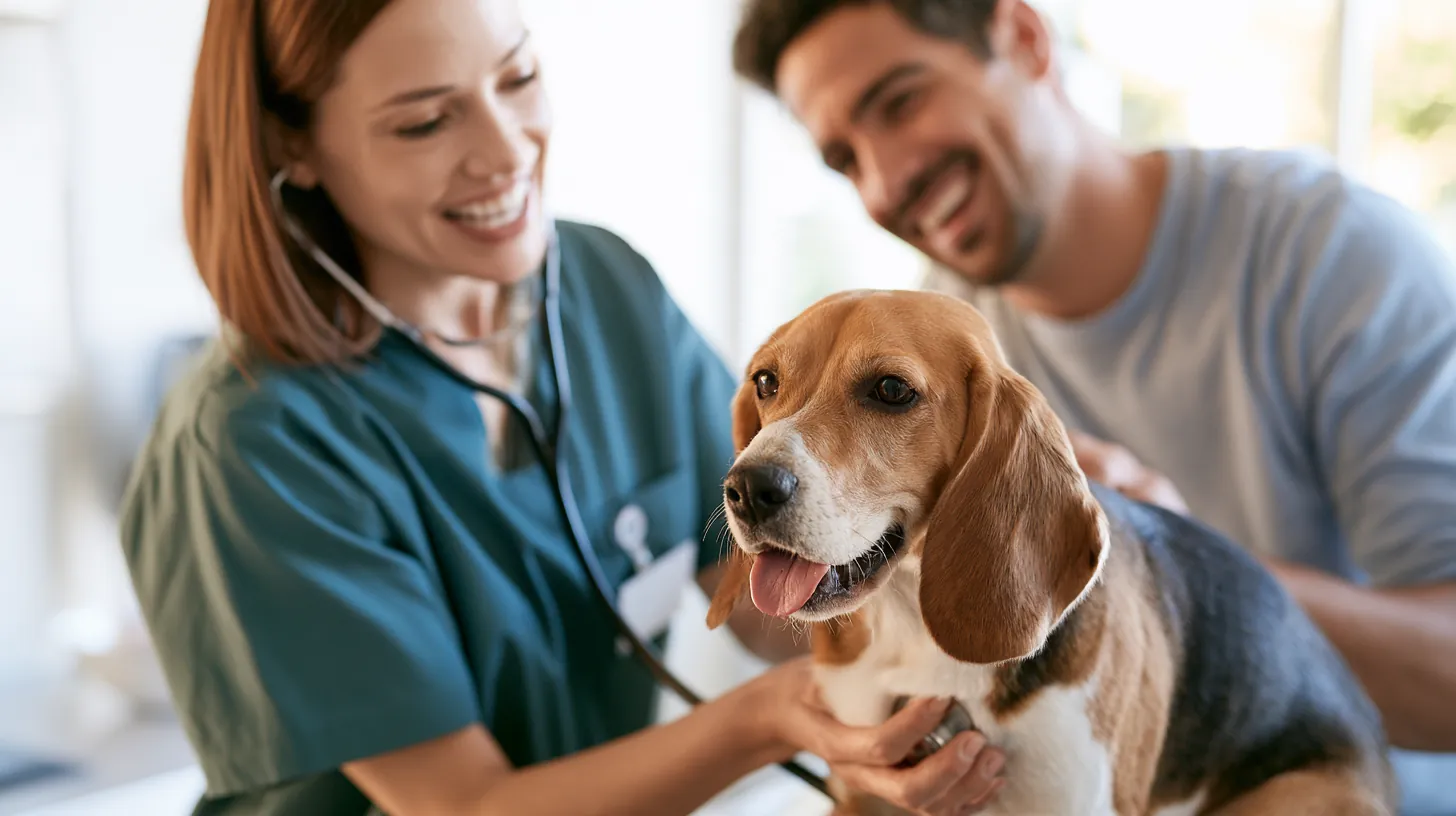
A vet bill rarely arrives at a convenient moment. A dog swallows a sock on a Sunday, a cat stops eating, or a routine dental visit turns into extractions. People searching for lendgo loans in that moment usually want two things: a clear sense of what the visit will cost, and a way to pay it without draining rent money. This page covers both. You will find commonly reported cost ranges for common situations, the questions worth asking your clinic before you sign anything, an honest comparison of pet insurance, clinic payment plans, savings and personal loans, and a simple rule for sizing the loan so you borrow the estimate plus a small buffer, not a round number that feels safe.
We are not a veterinary service and nothing here is medical guidance. Your vet decides what care your animal needs. Our role is narrower: when you compare lendgo loans here, our request form shares your details with lenders in our network, and those lenders review, decide, set terms and fund. Using our service costs nothing, and you are never obligated to accept an offer.
What vet bills commonly cost
Vet bills commonly range from about $100 for an emergency exam fee to $6,000 or more for orthopedic or abdominal surgery, depending on your region, the clinic type, your animal's size and how long care lasts.
The table below shows ranges that pet owners and clinics commonly report. Treat every figure as a rough estimate, not a quote, and use the high end when you size any personal loan. Emergency and specialty hospitals usually charge more than a general practice, and city clinics often charge more than rural ones.
| Situation | Commonly reported range (estimate) | What often drives the cost |
|---|---|---|
| Emergency exam fee only | About $100–$300 | After-hours timing, ER vs. general clinic |
| Overnight hospitalization (1–2 nights) | About $800–$3,000 | Monitoring level, IV fluids, medications |
| Foreign-body surgery (swallowed object) | About $2,000–$6,000+ | Imaging, surgery length, recovery days |
| Cruciate ligament repair (per knee) | About $3,000–$6,500 | Repair method, dog size, specialist fees |
| Dental cleaning with extractions | About $500–$2,500 | Number of teeth, dental X-rays, anesthesia time |
| Diagnostics (X-rays, bloodwork) | About $250–$800 combined | Number of views, lab panels ordered |
Two patterns stand out. First, the exam fee is usually a small slice of the final bill; diagnostics, hospitalization and procedures add up quickly. Second, the range for any single procedure is wide because no two cases are alike, which is why lendgo loans requests work best once you have a written figure. If you want a deeper look at the urgent side of this, our guide to what emergency vet care typically costs walks through a visit line by line.
Why the same procedure costs different amounts
A large-breed dog needs more anesthesia, more medication and sometimes larger implants than a small dog, so the bill scales with weight. A board-certified surgeon at a referral hospital usually charges more than a general-practice vet, though not every case needs a specialist. Weekend and overnight care carries staffing costs that show up as higher fees. None of this is a reason to delay care; it is a reason to ask for numbers in writing.
Loan sizes
Common amounts for pet care loans
Typical ranges and terms people request in this category. Lenders set the final amount, APR and term.
Ask your vet for an itemized estimate first
An itemized estimate is the single most useful document before you request lendgo loans or any personal loan, because it shows a low and high figure, lists each service, and tells you when payment is due so you can size any loan precisely.
Most clinics can produce a written estimate within minutes, even in an emergency room. Ask for it before you agree to treatment beyond the initial exam, and ask the team to walk you through it. Owners who search lendgo after a diagnosis often skip this step, but respectful questions get respectful answers, and front-desk staff field these conversations every day.
Useful questions to ask:
- What is the low end and the high end of this estimate, and what would push us toward the high end?
- How much is due today as a deposit, and when is the balance due?
- Which items are needed now and which could be scheduled later, if any?
- Will there be recheck visits, medications or a cone that are not on this sheet?
- Do you accept a third-party payment plan, and do you offer any in-house arrangement?
Payment timing matters as much as the total, and it shapes whether lendgo loans can arrive in time. Many emergency hospitals ask for a deposit of roughly half the low estimate before treatment starts, with the balance due at discharge. A personal loan often funds the next business day after approval, sometimes the same day, depending on the lender and your bank. That gap means you may cover the deposit with a card or savings and use the loan for the discharge balance, or for a planned procedure booked a few days out. For planned surgeries, our walkthrough on paying for dog surgery covers how to line up funding before the appointment.

How lendgo loans work for a vet bill
Lendgo loans searches usually lead to one short request form: you share basic income and contact details, lenders in our network review them, and any lender that makes an offer sets the APR, term and funding date.
The process for a vet bill looks like this:
- Get the estimate. Note the high figure and the payment dates.
- Pick a loan amount. Use the buffer rule in the next sections rather than a round guess.
- Complete the request form. It typically takes about five minutes. Many lenders start with a soft credit check that does not affect your score; a hard inquiry usually comes only if you accept an offer and move forward.
- Compare offers side by side. Look at APR, monthly payment, total repaid and any origination fee.
- Accept only if the numbers fit. Funds usually arrive by direct deposit, often the next business day after approval.
Because funds land in your bank account rather than at the clinic, you can pay the vet the way the clinic prefers. That flexibility is one reason people compare lendgo loans with clinic financing: the money is yours to direct, and the repayment schedule is fixed from the start. Fixed is the key word. A personal loan has a set monthly payment and a set end date, which makes it easier to plan around than a revolving balance.
Typical personal loan APRs across lenders run from about 6% to 35.99%, and some state-licensed lenders charge more. Our page on current rate ranges and what moves them explains how credit, income and term change the APR you may see.
Pet insurance, clinic plans, savings or a loan
The best way to pay a vet bill depends on timing: savings and existing insurance cost the least, clinic payment plans can be cheap when promotional terms are honored, and a personal loan fits when you need a fixed payment without a large card balance.
| Option | Typical cost to you | Works for a bill today? | Main catch |
|---|---|---|---|
| Emergency savings | No interest | Yes | Drains the fund you may need next |
| Pet insurance (existing policy) | Premiums plus deductible and co-pay | Usually reimburses after you pay | Pre-existing conditions are commonly excluded; new policies have waiting periods |
| Clinic in-house payment plan | Often low or no interest | Only if the clinic offers it | Many clinics do not, or require a large deposit |
| Third-party vet financing | Promotional rates, then often high APR | Yes, if approved | Deferred interest can apply retroactively if not paid in time |
| Credit card | Card APR | Yes | Minimum payments stretch the balance for years |
| Personal loan | About 6%–35.99% APR (estimate) | Often next business day | Interest and possible origination fee |
A few honest notes on each:
- Savings first, when you have it. Paying part of the bill from savings and borrowing only the rest cuts interest more than any rate shopping can.
- Pet insurance helps most before you need it. If you already have a policy, file the claim; the reimbursement can pay down a loan early. If you do not, a new policy will not cover a problem that already exists.
- Clinic plans are worth asking about. Some practices split a bill over a few months for established clients. Ask before assuming no.
- Read promotional financing closely. Deferred-interest offers can be a good deal if you clear the balance on time, and expensive if you miss by one payment.
A personal loan earns its place when the bill is large, the clinic wants payment at discharge, and you would rather have one fixed payment than a growing card balance. Checking lendgo rates through a soft-check request lets you see real numbers before you decide.
Borrow the estimate plus a small buffer
Borrow the high end of your written estimate plus a buffer of roughly 5% to 10% for follow-up costs, then subtract anything you can pay from savings or will be reimbursed by insurance.
The buffer exists for the things estimates commonly leave out: a recheck exam, a round of medication, a special diet for a few weeks, or a second X-ray. It should not grow into money for unrelated plans. People who size lendgo loans this way usually end up with a smaller balance and a shorter payoff. Every extra dollar borrowed is a dollar repaid with interest.
Here is how the math works for three common situations, using representative estimates at 24.99% APR over 12 months:
| Scenario | High estimate | Buffer | Paid from savings | Loan amount | Est. monthly payment |
|---|---|---|---|---|---|
| Overnight stay for a vomiting dog | $1,400 | $100 | $500 | $1,000 | About $95.04 |
| Cat dental with extractions | $1,350 | $150 | $0 | $1,500 | About $142.56 |
| Foreign-body surgery | $2,600 | $200 | $800 | $2,000 | About $190.08 |
As a representative example, $2,000 borrowed for 12 months at 24.99% APR works out to about $190.08 a month, about $2,280.94 repaid in total and about $280.94 in interest. Your actual personal loan offer depends on the lender, your credit and your state.
Origination fees change the math. If a lender deducts a 5% fee, a $1,500 loan deposits about $1,425 into your account. When the clinic needs the full amount, ask whether the fee is deducted, and size the request so the deposit covers the bill. Dental work is a good case for careful sizing because the estimate often lands in a narrow band; our guide on how to budget for a cat dental cleaning shows how to plan for the extraction line items.
Choosing a term and payment you can carry
Choose the shortest term whose monthly payment still leaves room for groceries, rent and the next routine vet visit, because shorter terms cost less interest even though each payment is higher.
The same $1,000 personal loan at 24.99% APR looks very different depending on the term:
- 6 months: about $179.02 a month
- 12 months: about $95.04 a month, about $1,140.47 in total
- 18 months: about $67.19 a month
The 18-month payment is easier on a tight month, but you pay interest for a full extra year compared with six months. If your budget can handle the 12-month figure, that is often a sensible middle ground. Many personal loans let you pay early without a penalty, so a longer term with extra payments when an insurance check arrives can work too. Confirm there is no prepayment penalty in the loan agreement before you count on that plan.
People comparing lendgo personal loans for a pet bill sometimes focus only on the monthly figure. Look at the total repaid as well. A payment that fits this month but runs for three years can crowd out the savings that would have covered the next surprise.
What lenders look at before an offer
Lenders in our network typically look at your income, your existing monthly debts, your credit history and your bank account details, and each lender sets its own minimum requirements and decides independently.
Most lenders that offer personal loans want you to be at least 18, a U.S. resident, and able to show regular income from work, benefits or another steady source. A checking account in your name is usually required for funding and automatic payments. Bad credit is considered by some lenders, though a lower score usually means a higher APR or a smaller approved amount. If you want to know where you stand before you apply, our page on who typically qualifies and what to have ready lists the common requirements.
A few practical steps help the review go smoothly:
- Have a recent pay stub or benefits letter handy.
- Know your monthly rent or mortgage and other loan payments.
- Use the same name and address that appear on your bank account.
- Request the amount you actually need; a smaller request can be easier to approve.
Readers who look up lendgo during a stressful week sometimes rush this step. Five extra minutes to gather documents can save a day of back-and-forth with a lender, and it makes lendgo loans offers easier to compare.
Planning for the weeks after the visit
After the bill is paid, set up automatic payments, file any insurance claim right away, and start a small pet fund so the next visit does not require borrowing at all.
Recovery often brings its own costs. A post-surgery recheck, pain medication, or a soft-food diet can add a few hundred dollars over the following month. If you built a buffer into the personal loan, those costs are already covered. If not, set aside a little from each paycheck until the recovery period is over.
A pet fund does not have to be large to make a difference. Setting aside $25 to $40 a week builds about $1,300 to $2,000 over a year, enough to cover an emergency exam and diagnostics or a dental cleaning without a new personal loan. Many owners run the fund alongside the loan payment, then redirect the full loan payment into the fund once the balance is paid off. That habit turns one stressful vet bill into a plan for the next one.
If you are still comparing lendgo loans against other ways to pay, it can help to write down three numbers: the high estimate, the amount you can pay from savings, and the monthly payment you could carry for a year. Those three figures answer most of the question before you fill out any form. Checking lendgo rates against that monthly figure is the last step, and you can decline any offer that does not fit.
Questions
Frequently asked questions
Can I use a personal loan to pay an emergency vet hospital?
Yes. Loan funds go into your bank account, so you can pay the clinic by card or debit at discharge. Because funding often arrives the next business day after approval, you may need savings or a card for the initial deposit and use the loan for the remaining balance.
Will checking offers for a vet bill hurt my credit?
Many personal loan lenders start with a soft credit check, which does not affect your score. A hard inquiry usually happens only after you choose an offer and continue with that lender, and it can lower a score by a few points for a while.
Is pet insurance cheaper than borrowing for vet care?
Often, if the policy is in place before the problem starts and the condition is covered. Insurance usually reimburses you after you pay, so some owners borrow to cover the bill and then use the reimbursement to pay the loan down early.
How much should I borrow for my pet's surgery?
Start with the high end of the clinic's written estimate, add roughly 5% to 10% for follow-up costs, and subtract what you can pay from savings. If the lender deducts an origination fee, size the request so the amount you receive still covers the bill.
Keep exploring
Explore other loan types & amounts
Free to use · No obligation
Ready to compare personal loan offers?
One short request, no fee to use our service and no obligation to accept an offer.